Team Ziggy Stardust is comprised of Wesley Akers, Susannah Simmons, and La Dawna Minnis, based upon a common curiosity for and appreciation of public art. After initially connecting on social media, we soon found that although we have different professional backgrounds and are in different ILT tracks our common passion for creative endeavors united our efforts. Each one of our diverse research topics shares a common thread of designing, creating, or engaging with art; moreover, the impact on individual and community identity, civic engagement, and future economic opportunities.
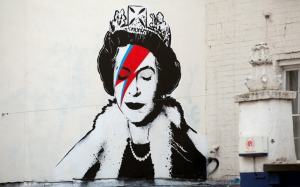 Q#1: How is community identity impacted through designing/creating/engaging with music in public spaces?
Background
The A Center for Engaged Spirituality has been evolving and reinventing itself for the past 116 years. Its roots in Christianity have expanded to meet the needs of broader beliefs and accommodate those looking for a more inclusive spiritual community. At the A Center, music is being used as a tool to take people to places that exist beyond words. The World Music Program Director organizes stellar live music to promote connection and higher awareness every week at the A Center. Hence the question, “How does community identity occur through designing/creating/engaging with music in community groups?”
Problem/Opportunity
The words church and religion detour many people from such community places like the A Center. How is the A Center promoting community identity by engaging members through music, which indirectly increases membership, affords financial stability, and influence the larger community? Creating new possibilities for members to design, create, and engage with music could contribute to growing community identity, increasing civic engagement, and developing future economic opportunities.
Participants
Participants will include musicians, members of the congregation, and any social media connections made in this process.
Data Collection:
Interviews will be conducted with, videos taken, and surveys will be given to
- Members of the congregation
- Musicians
about their beliefs around
- Althea community identity, engagement, ownership, and pride
- their economic future in Capitol Hill
- music
- tools for designing, creating, and engaging with music
Impacts
Positive impacts of exploring the A Center engagement through music could broaden awareness of the music program, higher attendance, and more financial stability. Negative impacts could include that focusing on the music only will detract from other programs at the A Center as well as potentially distracting members from worship through surveys, videos, and pictures during musical performances.
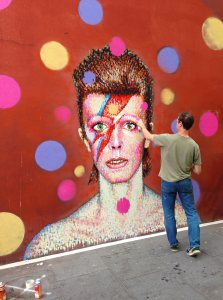 Q#2: How does learning occur through designing, creating, or engaging with public art in schools?
Background
Graffiti can be seen all over School A being used to vandalize buildings and to identify gang territory. In the spring, sixth graders at School A participate in a 9-week instructional unit focusing on the impact of graffiti art and vandalism on communities. At the end of the unit, students create a blueprint for a graffiti mural they believe would have a positive impact on their community and/or school and justifying it with an written artist’s statement.
Problem/Opportunity
Stigmas attached to graffiti vandalism limit it’s use as a learning tool for fostering identity as a school community and negatively impacts school ownership and pride. Additionally, graffiti stigmas limit possible future economic opportunities for students. Teaching about public art and graffiti presents an opportunity for students to develop positive individual and school identity and increase sense of ownership in their life and community.
Participants
School A students, faculty, and staff will participate by sharing their beliefs about the impacts of designing, creating, and engaging with public art.
Data Collection
Interviews will be conducted with and surveys will be given to
- 7th and 8th grade students who have completed the graffiti unit in sixth grade
- 6th graders who will take the graffiti unit in the spring
- School A faculty and staff about their beliefs around
- school community identity, engagement, ownership, and pride
- their economic future
- public art
- graffiti art and vandalism
- tools for designing, creating, and engaging with art
Impacts
Ideally positive impacts will emerge around learning how to create public art that encourages positive school identity development, engagement, ownership, and pride. Negative impacts could present themselves because graffiti is illegal in most cases. As students learn more about graffiti, there is also a concern that the amount of illegal graffiti vandalism will increase.
Q#3: How is individual identity impacted through designing/creating/engaging with art in online spaces?
Background
Designing/creating/engaging with art has a big impact on developing individual identity and . Through the use of new technologies, designing/creating/engaging art is happening online more frequently. New technologies also allow for collaborative production of designed online spaces and artworks.
Problem/Opportunity
Low accessibility to traditional cultural institutions limits opportunities for citizens in rural and underserved areas for designing/creating/engaging. Creating new opportunities for
designing/creating/engaging in the arts through shared online spaces could minimize this lack of opportunity.
Participants
The participants in this study will include members of online affinity spaces that feature activities for designing/creating/engaging with art.
Data Collection
Interviews will be conducted with and surveys will be given to
- members of online affinity spaces about their beliefs around
- how designing/creating/engaging in the arts has impacted their individual identity, sense of community, and economic opportunities
- what tools are commonly used in their processes
Impacts
Inclusion of data collection from online affinity spaces will allow for a more diverse demographic in data collection and potentially yield a wide breadth of responses. While the diversity of response could be helpful, it may also be difficult to identify trends and themes. In addition, due to the anonymity of online spaces there may be a portion of responses that are incomplete or off-topic.
 Wes Akers
Wes, La Dawna, and Susannah,
Background: I like how you all thought out of the box and have found a common thread to connect your action research.
Problem Statement or Opportunity: It seems feasible that each area of inquiry could be completed in our short timeframe; however, in regards to Question 2, you will really have to focus and ensure the project stays on track to meet deadlines.
Participants: Our readings have shown that it is important to interact with multiple stakeholders; thus, Q2 seems solid, Q1 engages two groups, but Q3 only lists one at this point.
Data Collection Methods: Your topics are linked by a common thread, but considerably different. I guess you will all be collecting separate data from the established participants. Will you each have enough time to collect it all?
Positive and Negative Impact: The more evidence that presents the arts in a positive light- the better! You are all very passionate and I hope that the data you collect will lead to positive conclusions rather than negative.
Best of luck in your future researching!
LikeLike